Table of contents ▸
Introduction: Why Clinical Trial Data Security Matters in 2026
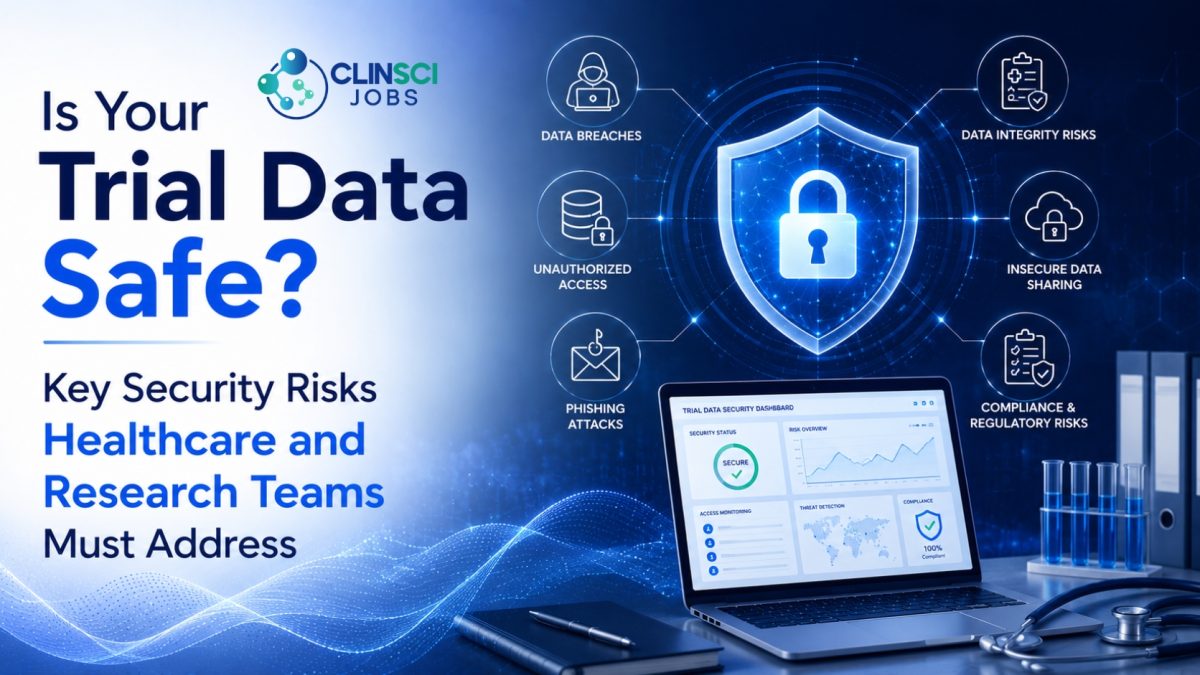
In 2026, clinical trial data security has emerged as one of the most critical priorities for healthcare and research organizations in the United States. As clinical trials become increasingly digital, decentralized, and reliant on cloud platforms, the volume and sensitivity of data being collected, stored, and transmitted have expanded exponentially. Patient health information, genomic data, real-world evidence, and proprietary research findings are all at risk if data security protocols are not rigorous and continuously updated.
For clinical research professionals—Clinical Research Associates, Clinical Trial Coordinators, Clinical Data Managers, Healthcare Data Analysts, Regulatory Affairs Specialists, and Clinical Research Nurses—understanding data security is no longer optional. It is a core competency required for compliance, patient protection, regulatory approval, and career advancement.
This article explains what clinical trial data security involves, why it matters more than ever in 2026, what regulatory frameworks govern it, what technical and operational measures are necessary, and what clinical professionals should know to protect data and advance their careers. Strong clinical trial data security protects patient privacy, preserves data integrity, and supports successful regulatory submissions.
What Is Clinical Trial Data Security?
Clinical trial data security refers to the policies, processes, technologies, and governance structures used to protect the confidentiality, integrity, and availability of data generated and used in clinical research. This includes protecting data from unauthorized access, breaches, modification, loss, and misuse throughout the trial lifecycle—from protocol development and patient enrollment through data collection, analysis, regulatory submission, and archiving. Effective clinical trial data security aligns people, processes, and technology to protect sensitive research information throughout the study lifecycle.
Data security in clinical trials encompasses several domains: technical security (encryption, access controls, firewalls), physical security (secure data centers, device management), administrative security (policies, training, audit trails), and regulatory compliance (HIPAA, FDA 21 CFR Part 11, GDPR, GCP).
Why Clinical Trial Data Security Is More Critical Than Ever
Increased Digital and Decentralized Trial Models
The shift toward decentralized clinical trials (DCTs), remote monitoring, wearable devices, electronic patient-reported outcomes (ePRO), and telemedicine has dramatically expanded the number of endpoints where data is captured, transmitted, and stored. Each new digital touchpoint introduces potential vulnerabilities—from mobile apps and wearable sensors to home health devices and video conferencing platforms. Without robust clinical trial data security, each digital endpoint can create another opportunity for unauthorized access to patient and study data.
Rising Cybersecurity Threats Targeting Healthcare
Healthcare remains one of the most targeted sectors for cyberattacks. Ransomware, phishing, insider threats, and data breaches have affected hospitals, research institutions, and pharmaceutical companies across the United States. Clinical trial data—with its combination of sensitive patient information and valuable intellectual property—is a high-value target for malicious actors. These risks make clinical trial data security a top priority for sponsors, CROs, research sites, and technology vendors.
Regulatory Scrutiny and Enforcement
The FDA, Department of Health and Human Services (HHS), and other regulatory bodies have increased scrutiny on data integrity and security. Non-compliance with HIPAA, FDA regulations, or Good Clinical Practice (GCP) guidelines can result in warning letters, study delays, loss of regulatory approval, civil penalties, and damage to organizational reputation. Strong clinical trial data security controls help organizations prepare for inspections, audits, and compliance reviews.
Patient Trust and Enrollment
Participants are increasingly aware of data privacy risks and expect sponsors and research sites to protect their information. High-profile data breaches erode public trust and can negatively impact recruitment and retention in clinical studies. Clear communication about clinical trial data security can build participant confidence and support enrollment.
Key Regulatory Frameworks Governing Clinical Trial Data Security
HIPAA (Health Insurance Portability and Accountability Act)
HIPAA establishes national standards for the protection of individually identifiable health information. Covered entities and business associates involved in clinical research must implement administrative, physical, and technical safeguards to ensure the confidentiality, integrity, and security of protected health information (PHI). HIPAA violations can result in significant fines and legal consequences. HIPAA compliance is a foundational part of clinical trial data security when organizations handle protected health information.
FDA 21 CFR Part 11
21 CFR Part 11 sets requirements for electronic records and electronic signatures used in FDA-regulated clinical trials. It mandates that electronic systems used in trials ensure data integrity, security, audit trails, and validation. Sponsors and CROs must demonstrate that their EDC systems, ePRO platforms, and data management tools comply with Part 11 requirements. Validated systems and complete audit trails are essential components of clinical trial data security in FDA-regulated studies.
Good Clinical Practice (GCP) and ICH E6(R2)
GCP guidelines require sponsors and investigators to implement systems and processes that ensure the quality and integrity of trial data. ICH E6(R2) emphasizes risk-based approaches to data management and the use of validated, secure electronic systems.
GDPR (General Data Protection Regulation)
For trials conducted in Europe or involving EU citizens, GDPR imposes strict requirements on how personal data is collected, processed, stored, and transferred. Even US-based organizations must comply with GDPR if they handle data from EU participants.
Technical Measures for Protecting Clinical Trial Data
Encryption
Data encryption—both in transit and at rest—is fundamental. All electronic data transmissions between sites, sponsors, and third-party vendors should use strong encryption protocols (e.g., TLS 1.2 or higher). Data stored on servers, cloud platforms, and devices should be encrypted using industry-standard algorithms. Encryption at rest and in transit remains a core building block of modern clinical trial data security.
Access Controls and Authentication
Role-based access control (RBAC) ensures that users can only access data and system functions appropriate to their role. Multi-factor authentication (MFA) adds an additional layer of security by requiring more than just a password to access systems. Audit trails must log all user access and data modifications for accountability and regulatory compliance. Role-based access and multi-factor authentication strengthen clinical trial data security by limiting access to authorized users.
Secure Cloud Platforms and Data Centers
Cloud-based clinical trial platforms must meet rigorous security standards, including SOC 2 Type II certification, ISO 27001 compliance, and adherence to HIPAA and GDPR requirements. Data centers should have physical security measures, redundancy, disaster recovery plans, and regular security audits. Selecting vendors with proven clinical trial data security capabilities reduces operational and compliance risk.
Network Security
Firewalls, intrusion detection systems, and network segmentation help protect trial data from external and internal threats. Virtual private networks (VPNs) should be used when accessing clinical systems remotely.
Device Management and Endpoint Security
Wearables, tablets, and mobile devices used in decentralized trials must be secured with device encryption, remote wipe capabilities, antivirus software, and regular security updates. Lost or stolen devices should be reported immediately and deactivated. Consistent endpoint controls ensure that remote devices support clinical trial data security instead of creating avoidable risk.
Operational and Administrative Safeguards
Security Training and Awareness
All personnel involved in clinical trials—CRAs, coordinators, data managers, investigators, and site staff—must receive regular training on data security best practices, phishing awareness, password hygiene, and incident reporting. Human error remains one of the leading causes of data breaches. Every person who handles trial information has a direct role in maintaining clinical trial data security.
Policies and Standard Operating Procedures (SOPs)
Organizations must establish and enforce clear policies governing data access, handling, transmission, storage, and disposal. SOPs should cover password management, secure email practices, data sharing agreements, and breach response protocols.
Vendor and Third-Party Risk Management
Sponsors and CROs work with numerous third-party vendors—EDC providers, labs, imaging centers, ePRO platforms, and data analytics firms. Each vendor introduces potential security risk. Organizations must conduct thorough security assessments, require contractual data protection obligations, and monitor vendor compliance continuously.Vendor assessments should evaluate clinical trial data security policies, certifications, breach history, and contractual safeguards.
Incident Response Planning
Every organization must have a documented incident response plan that defines how to detect, report, contain, investigate, and remediate data security incidents. The plan should include timelines for notifying affected individuals, regulators, and sponsors in accordance with HIPAA breach notification rules and other applicable regulations.
Data Security Considerations Across the Trial Lifecycle
Protocol Development and IRB Submission
Security considerations should be built into study design. Protocols should specify what data will be collected, how it will be secured, who will have access, and how long it will be retained. Informed consent documents must explain how patient data will be protected and used. Clinical trial data security requirements should be documented in protocols, data management plans, and informed-consent materials.
Site Activation and Training
Before sites begin enrolling patients, they must be trained on the security features of trial systems, proper handling of source documents, and compliance with data protection regulations. Site assessments should evaluate physical security, IT infrastructure, and staff training.
Data Collection and Entry
Data should be entered directly into validated, secure EDC systems whenever possible. Paper source documents must be stored in locked cabinets with restricted access. Mobile devices and wearables must be configured with encryption and remote management. Validated EDC platforms and managed devices are practical tools for improving clinical trial data security during daily operations.
Data Monitoring and Quality Control
CRAs and data managers must access data through secure, audit-logged systems. Remote monitoring should use VPNs and MFA. Query resolution and data cleaning activities must preserve audit trails and maintain data integrity.
Data Transfer and Sharing
Transferring data between sponsors, CROs, sites, and regulators requires secure file transfer protocols (SFTP), encrypted email, or secure collaboration platforms. Data sharing agreements must define security obligations and permitted uses. Encrypted transfer methods are essential to clinical trial data security when information is shared between sites, sponsors, and CROs.
Archiving and Retention
Clinical trial data must be retained for regulatory-defined periods (often 25+ years for investigational products). Archived data must remain secure, retrievable, and protected from degradation, unauthorized access, and loss. Long-term retention plans must maintain clinical trial data security throughout the required archival period.
Career Implications: Data Security Skills for Clinical Professionals
Growing Demand for Security-Aware Clinical Talent
Employers are increasingly seeking clinical professionals who understand data security principles and can apply them in day-to-day trial operations. Roles such as Clinical Data Manager, Clinical Research Associate, and Clinical Operations Specialist now frequently require knowledge of HIPAA, FDA Part 11, and secure data handling practices. Employers value professionals who can apply clinical trial data security principles within real-world study workflows.
Skills That Matter
Clinical professionals should develop competencies in: understanding HIPAA Privacy and Security Rules; familiarity with FDA 21 CFR Part 11 and GCP data integrity requirements; secure use of EDC, ePRO, and clinical trial management systems; recognizing phishing, social engineering, and common cybersecurity threats; incident reporting and breach response protocols; and working with IT and security teams to implement safeguards.
Certifications and Training
Completing training in HIPAA compliance, GCP, clinical data management, and cybersecurity awareness strengthens resumes and demonstrates commitment to data protection. Certifications such as Certified Clinical Data Manager (CCDM) and training in FDA regulations and data integrity are increasingly valued.
Practical Takeaways for Clinical Research Professionals
- Use strong, unique passwords and enable multi-factor authentication on all trial-related systems.
- Never share login credentials or access codes with colleagues.
- Always use secure, encrypted methods when transmitting patient data or study documents.
- Report lost devices, suspected phishing emails, or unusual system behavior immediately.
- Complete all required security and HIPAA training on time and stay updated on evolving threats.
- Follow your organization’s SOPs for data handling, access, and breach response.
- When working remotely, use VPNs and secure networks—avoid public Wi-Fi for accessing trial systems.
- Advocate for security best practices at your site or organization and escalate concerns when safeguards are inadequate.
Conclusion
Clinical trial data security is a shared responsibility that extends across sponsors, CROs, sites, vendors, and every individual involved in research. In 2026, with trials increasingly digital, decentralized, and data-intensive, robust security is non-negotiable—for regulatory compliance, patient protection, intellectual property preservation, and public trust. Organizations that invest in clinical trial data security can reduce compliance exposure while strengthening trust with patients and regulators.
For Clinical Research Associates, Clinical Trial Coordinators, Clinical Data Managers, Healthcare Data Analysts, Regulatory Affairs Specialists, and Clinical Research Nurses, understanding and practicing data security is essential. The professionals who thrive in this environment are those who combine clinical expertise with a strong commitment to data integrity, privacy, and security.
Call to Action
- Search clinical jobs in clinical data management, clinical operations, and healthcare data security across the United States.
- Upload your resume to connect with sponsors, CROs, and research organizations actively hiring for security-aware clinical roles.
- Apply now for Clinical Data Manager, Clinical Research Associate, Healthcare Data Analyst, and Regulatory Affairs Specialist positions in 2026’s most innovative and compliant research programs.
Q1. How is AI changing the day-to-day work of a Clinical Data Manager?
AI is shifting Clinical Data Managers from manual, batch-based data cleaning toward continuous, risk-stratified oversight. Rather than reviewing every data point manually, CDMs now work with AI-generated anomaly flags and confidence scores that prioritize the highest-risk data for human review. AI is also automating query generation, EDC study build tasks, and data coding—reducing routine administrative work and freeing CDMs to focus on quality governance, system validation, and strategic trial oversight.
Q2. What EDC and technology skills are most in demand for clinical data jobs in 2026?
Employers across CROs, pharma sponsors, and digital clinical trial platforms consistently seek hands-on experience with leading EDC platforms, knowledge of CDISC data standards (SDTM and ADaM), familiarity with AI-assisted data review and query management tools, and at least basic proficiency with SQL, SAS, or Python for data extraction and transformation tasks. Understanding FHIR-based EHR integrations and wearable data streams is increasingly valued for roles supporting decentralized or hybrid trial designs.
Q3. Does AI reduce the need for human review and oversight of clinical trial data?
No—and this is a critical point for both data quality and regulatory compliance. AI tools flag, prioritize, and propose actions on clinical data, but qualified human personnel remain responsible for reviewing those outputs, making final quality decisions, and signing off on data integrity. Regulatory frameworks including FDA 21 CFR Part 11, ALCOA++ data integrity principles, and the FDA’s January 2026 Guiding Principles for AI in Drug Development all require that AI-generated outputs be validated, documented, and subject to human accountability throughout the trial.
Q4. How does AI in clinical data management affect FDA inspection readiness and data integrity?
AI does not lower the bar for FDA inspection readiness—it raises the complexity of what needs to be demonstrated. During inspections, teams must be able to show not just that data is clean and audit-trailed, but that AI tools were validated for their specific use, that outputs were reviewed by qualified staff, and that any overrides or escalations are documented in the audit trail. Data integrity failures—including issues with attributability, contemporaneous recording, and audit trail completeness—continue to appear in the majority of FDA warning letters, making this a top compliance priority regardless of whether AI is involved.
Q5. What new job titles are emerging in AI-driven clinical data management?
Alongside traditional CDM roles, newer titles gaining visibility in 2026 include AI-Enabled CDM Associate, Clinical Data Standards Specialist, Risk-Based Data Reviewer, Trial Technology Coordinator, and Clinical Data Scientist (focused on real-world and hybrid data sources). These roles combine traditional CDM competencies with AI tool literacy, data analytics skills, and familiarity with decentralized trial technologies—creating new career pathways for professionals who invest in building these capabilities.
Q6. Is programming knowledge (SAS, Python, SQL) now required for clinical data management jobs?
Programming fluency is increasingly expected—particularly SQL and at least one analytical language such as SAS or Python—especially for mid-level and senior CDM roles, as well as for Healthcare Data Analyst and Clinical Data Scientist positions. Entry-level roles may not require coding, but candidates who can demonstrate even foundational data query skills stand out in competitive hiring processes. The combination of CDM expertise plus data analytics proficiency is one of the most in-demand skill profiles across sponsors, CROs, and digital clinical trial platforms in 2026.
Q7. What certifications are most valuable for clinical data management careers in 2026?
The Certified Clinical Data Manager (CCDM) credential from the Society for Clinical Data Management is the most widely recognized professional certification in the field and signals foundational CDM competence to hiring organizations. CDISC certifications—covering SDTM and ADaM standards—are particularly valuable for roles focused on data standardization, submission preparation, and regulatory alignment. Training in GCP, 21 CFR Part 11 compliance, and AI system validation principles are also increasingly sought by employers hiring for compliance-critical CDM and quality assurance roles.
Follow us on Social Media: LinkedIn | Facebook | Twitter | Instagram