Table of contents ▸
Introduction: When Standard Treatment Falls Short
Depression is one of the most common mental health conditions in the United States, affecting tens of millions of adults each year. For many people, antidepressant medications—such as selective serotonin reuptake inhibitors (SSRIs), serotonin-norepinephrine reuptake inhibitors (SNRIs), and other classes—provide meaningful relief. But for a significant portion of those diagnosed with major depressive disorder (MDD), standard medications do not work as hoped. Symptoms persist, quality of life remains impaired, and the search for effective treatment can feel overwhelming.
If you or someone you care about has tried multiple antidepressants without adequate improvement, you are not alone—and you have not run out of options. In 2026, clinical trial research is advancing rapidly, offering new therapeutic approaches, novel medications, and investigational treatments that may provide hope where conventional therapies have failed.
This article is written for patients, caregivers, and healthcare advocates exploring what to do when depression medication is not enough. It explains what treatment-resistant depression (TRD) is, what emerging clinical trial options exist in 2026, how to find and evaluate trials, what to expect as a participant, and how clinical research professionals support patients through these studies.
What Is Treatment-Resistant Depression (TRD)?
Treatment-resistant depression is generally defined as major depressive disorder that does not adequately respond to at least two different antidepressant medications tried at adequate doses for sufficient duration (typically 4–8 weeks or longer per medication). It is estimated that approximately one-third of people with major depression meet criteria for TRD.
Having TRD does not mean you will never get better—it means that standard first-line treatments have not been effective so far, and that additional or alternative therapeutic strategies may be needed. These can include switching to medications with different mechanisms of action, augmenting antidepressants with additional drugs, psychotherapy, brain stimulation therapies (such as electroconvulsive therapy or transcranial magnetic stimulation), or participation in clinical trials testing novel treatments.
Why Consider Clinical Trials for Depression?
Access to Cutting-Edge Treatments Before FDA Approval
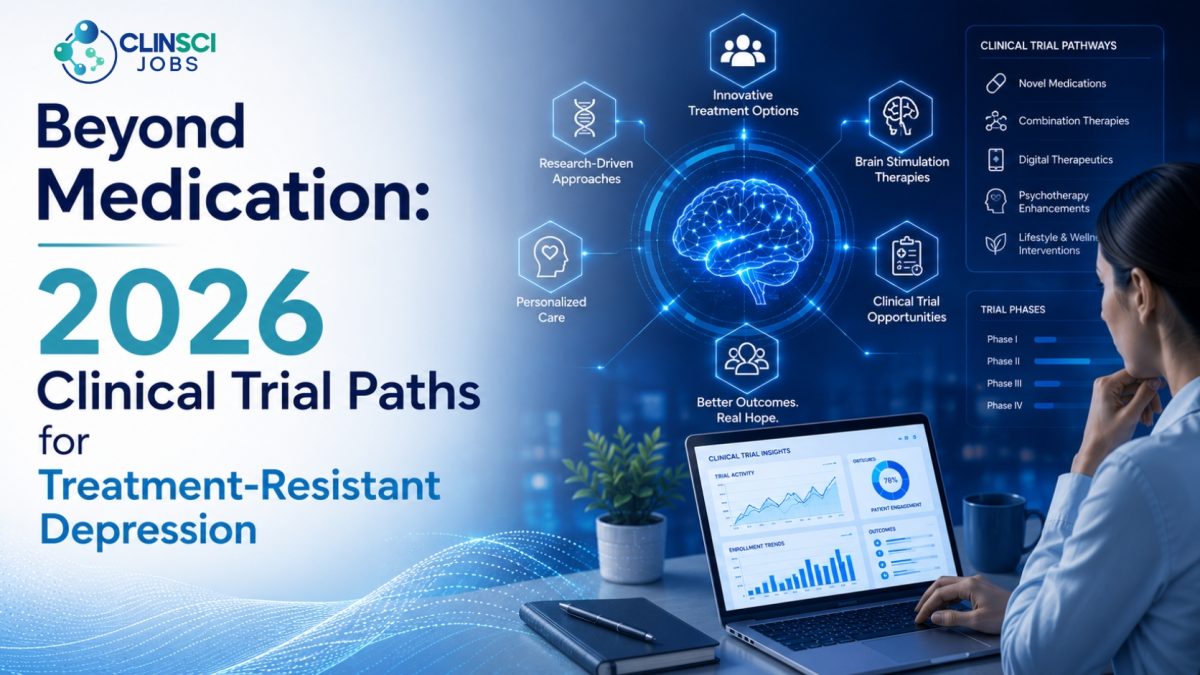
A Clinical Trial offers the opportunity to access investigational medications, devices, and therapies that are not yet available to the general public. In 2026, dozens of depression trials across the United States are testing new drugs targeting different brain pathways, rapid-acting antidepressants, psychedelic-assisted therapies, neuromodulation devices, digital therapeutics, and personalized medicine approaches.
Close Monitoring and Expert Care
Participants in clinical trials receive intensive monitoring by clinical research teams, including psychiatrists, clinical research coordinators, research nurses, and study staff. This typically includes regular assessments, psychiatric evaluations, safety monitoring, and coordinated care that may exceed what is available in routine clinical practice.
Contributing to Medical Progress
By participating in a clinical trial, you contribute to research that may lead to new FDA-approved treatments for depression, helping future patients who face similar challenges. Many people find meaning and empowerment in being part of the solution.
No Cost for Investigational Treatment
Study-related medications, procedures, and visits are typically provided at no cost to participants. In some trials, participants may also receive compensation for time and travel.
Emerging Clinical Trial Options for Depression in 2026
Novel Antidepressants with New Mechanisms of Action
Traditional antidepressants primarily target serotonin, norepinephrine, or dopamine systems. In 2026, clinical trials are testing medications that work through entirely different mechanisms, including:
- NMDA receptor modulators (similar to ketamine but designed for safer, easier administration)
- Neuroplasticity enhancers that promote the growth of new neural connections
- Inflammation-targeting drugs, recognizing the role of immune dysregulation in depression
- Orexin receptor antagonists and other sleep-wake regulators
- Opioid system modulators with low abuse potential
Psychedelic-Assisted Therapy Trials
Psychedelic compounds such as psilocybin (from “magic mushrooms”) and MDMA are undergoing rigorous clinical testing for treatment-resistant depression and PTSD. These therapies are administered in controlled clinical settings with trained therapists and close medical supervision. Early-phase and late-phase trials are actively recruiting across the United States in 2026.
Rapid-Acting and Long-Acting Formulations
Trials are testing new formulations of medications designed to work faster than traditional antidepressants (which can take 4–6 weeks) or provide longer-lasting relief with less frequent dosing. This includes intranasal, sublingual, injectable, and extended-release oral formulations.
Neuromodulation and Brain Stimulation Studies
Non-invasive and minimally invasive brain stimulation techniques are being studied for TRD, including:
- Transcranial magnetic stimulation (TMS) with novel protocols and targeting
- Transcranial direct current stimulation (tDCS)
- Vagus nerve stimulation (VNS)
- Deep brain stimulation (DBS) for severe, highly refractory depression
Digital Therapeutics and App-Based Interventions
Clinical trials are testing smartphone apps, virtual reality therapy, AI-powered mental health coaching, and digital cognitive behavioral therapy (CBT) platforms as standalone or adjunctive treatments for depression.
Biomarker-Driven and Personalized Medicine Approaches
Some trials use genetic testing, brain imaging, or blood biomarkers to match patients with treatments most likely to work for their specific biology. This precision medicine approach aims to reduce trial-and-error prescribing and improve outcomes.
How to Find Clinical Trials for Depression
ClinicalTrials.gov
ClinicalTrials.gov is the U.S. government’s official database of clinical studies. You can search for depression trials by condition, location, recruitment status, and intervention type. Use search terms like “major depressive disorder,” “treatment-resistant depression,” “TRD,” or specific treatments you are interested in.
Academic Medical Centers and Research Hospitals
Major universities and academic hospitals—such as those affiliated with the National Institute of Mental Health (NIMH), Johns Hopkins, Stanford, UCLA, Yale, Emory, and others—often run cutting-edge depression trials. Check their psychiatry department websites or call their research recruitment lines.
Pharmaceutical and Biotech Company Trial Locators
Companies developing new antidepressants often maintain trial finder tools on their websites. These allow you to enter your location and see if you are near an active trial site.
Patient Advocacy Organizations
Organizations like the Depression and Bipolar Support Alliance (DBSA), National Alliance on Mental Illness (NAMI), and Anxiety and Depression Association of America (ADAA) provide resources and links to current research opportunities.
Ask Your Psychiatrist or Primary Care Provider
Your doctor may be aware of local clinical trials or able to refer you to a research center. Some psychiatrists are also clinical investigators running their own trials.
What to Expect When You Join a Depression Clinical Trial
Screening and Eligibility
Not everyone qualifies for every trial. Screening typically includes a detailed psychiatric evaluation, medical history review, physical exam, and sometimes lab tests or imaging. Common eligibility criteria include diagnosis of major depressive disorder, history of inadequate response to antidepressants, minimum symptom severity scores, and absence of certain medical or psychiatric conditions that could interfere with the study.
Informed Consent
Before you enroll, the research team will explain the study in detail, including its purpose, procedures, risks, benefits, and alternatives. You will have the opportunity to ask questions and will be asked to sign an informed consent form. Participation is always voluntary, and you can withdraw at any time.
Study Visits and Assessments
Depression trials typically involve regular clinic visits over weeks or months. During these visits, you may complete questionnaires about your mood and symptoms, meet with a psychiatrist or psychologist, have vital signs checked, provide blood or urine samples, and receive the investigational treatment. The schedule varies by study but is clearly outlined before you commit.
Randomization and Blinding
Many trials use randomization (like a coin flip) to assign participants to different treatment groups, which may include the investigational drug, a placebo (inactive treatment), or an active comparator (approved medication). Some trials are “blinded,” meaning you and the study team do not know which treatment you are receiving until the study ends. This helps ensure objective measurement of the treatment’s effects.
Safety Monitoring
Your safety is the top priority. Clinical trials research teams closely monitor for side effects and adverse events. You will be given contact information for the study team and instructed to report any concerning symptoms immediately.
Compensation and Study-Related Costs
Study-related visits, tests, and investigational treatments are provided at no cost. Many trials also provide compensation for your time and travel expenses. Ask the study coordinator for details during screening.
Questions to Ask Before Joining a Trial
- What is the purpose of this study, and what treatment is being tested?
- What are the potential risks and side effects?
- What are the possible benefits, and is there a chance I will receive a placebo?
- How long will the study last, and how often will I need to come to the clinic?
- Will I be able to continue my current medications and therapy?
- What happens if the treatment works—can I continue it after the study ends?
- What happens if I experience side effects or want to leave the study?
- Who will be monitoring my care, and how can I reach them?
- Is there any cost to me, and will I be compensated?
- Has this treatment been tested before, and what were the results?
The Role of Clinical Research Professionals in Depression Trials
Clinical trials are managed by multidisciplinary teams who ensure patient safety, data quality, and regulatory compliance. Key roles include:
Clinical Research Coordinators
Coordinators are often the main point of contact for participants. They schedule visits, conduct assessments, provide education about the study, and ensure that all procedures are followed correctly.
Clinical Research Nurses
Research nurses administer investigational treatments, monitor vital signs, assess for adverse events, and provide clinical support throughout the trial.
Principal Investigators (Psychiatrists)
The principal investigator is a licensed psychiatrist or physician who oversees the study, evaluates participants, makes medical decisions, and ensures the trial is conducted ethically and according to the protocol.
Clinical Research Associates (CRAs)
CRAs monitor the study on behalf of the sponsor to ensure data integrity, regulatory compliance, and adherence to Good Clinical Practice (GCP) standards.
Regulatory Affairs Specialists
These professionals ensure that the study complies with FDA regulations, Institutional Review Board (IRB) requirements, and ethical guidelines for human subjects research.
Conclusion
If depression medication has not been enough, clinical trials in 2026 offer pathways to innovative treatments, expert care, and renewed hope. From novel medications and psychedelic-assisted therapies to brain stimulation and personalized medicine, research is opening doors for people with treatment-resistant depression.
Joining a clinical trial is a personal decision that should be made with full information, support from your healthcare team, and awareness of the potential risks and benefits. For many, it represents not just a chance at better treatment, but an opportunity to contribute to medical progress that will help others in the future.
If you are considering a clinical trial, take the time to research your options, ask questions, and reach out to the clinical trials research teams who are dedicated to supporting you through the process.
Resources for Patients
- ClinicalTrials.gov – Official U.S. database of clinical studies
- National Institute of Mental Health (NIMH) – Research and trial information
- Depression and Bipolar Support Alliance (DBSA) – Patient support and resources
- National Alliance on Mental Illness (NAMI) – Education and advocacy
- Anxiety and Depression Association of America (ADAA) – Information and support
For Clinical Research Professionals
If you are a clinical research professional interested in working on depression and mental health trials, opportunities are expanding rapidly. Clinical Research Coordinators, Clinical Research Nurses, Clinical Research Associates, Data Managers, and Regulatory Affairs Specialists are in high demand as sponsors and research institutions scale up studies in psychiatry and neuroscience.
Search clinical research jobs in depression trials, mental health research, and psychiatric clinical studies across the United States. Upload your resume to connect with leading academic medical centers, pharmaceutical companies, and contract research organizations hiring for these critical roles.
Follow us on Social Media: LinkedIn | Facebook | Twitter | Instagram