Table of contents ▸
Why Cancer Clinical Trial Access and Equity Matter in 2026
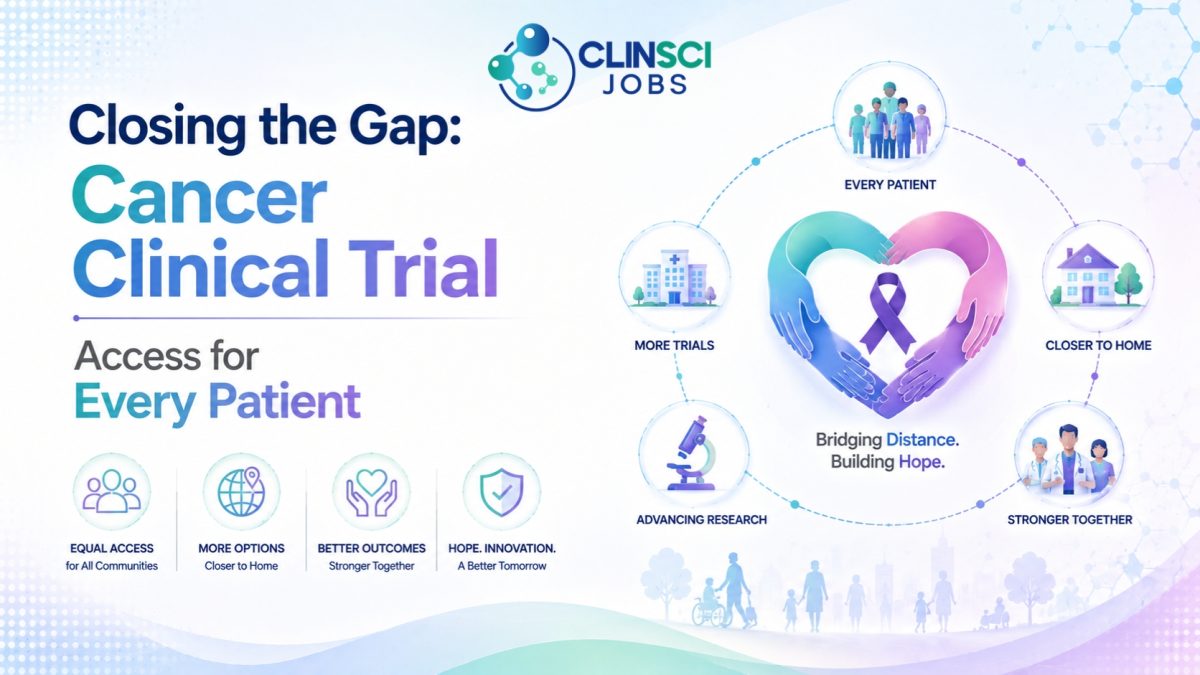
Only 3% to 7% of patients with cancer in the United States ever join a clinical trial, and new research published in 2026 shows that a patient’s daily financial resources and structural circumstances play a far larger role in that gap than previously understood. This is not a minor statistical footnote. It means that the evidence guiding cancer treatment decisions for millions of patients is being generated by a narrow, financially advantaged slice of the population—raising real questions about whether trial results generalize to the patients who will ultimately receive these treatments in everyday clinical practice.
The scope of this disparity is substantial. A 2026 analysis of 372 pivotal trials supporting FDA oncology drug approvals between 2018 and 2026 found that Black participants were enrolled at just a quarter of the rate expected based on their share of the US cancer burden, and Hispanic participants at about half the expected rate, with only modest improvement over time despite years of federal attention to the issue. Separately, income and property ownership have been identified among the strongest predictors of whether a patient enrolls in a cancer clinical trial at all, independent of insurance status or geographic proximity to a treatment center.
For clinical trial recruiters, oncology research teams, patient access professionals, and everyone working to build a more representative research enterprise, 2026 marks a moment when this issue is finally receiving the sustained data attention it deserves. This article examines what is driving the gap, why it matters for cancer research and patient trust, and how research teams and clinical careers are evolving in response.
How Income Disparity Shapes Clinical Trial Participation
The Financial Burden Behind Enrollment Decisions
Clinical trial participation carries real financial costs that go well beyond insurance coverage for the experimental treatment itself. Patients often face lost wages from missed work, transportation and parking expenses for frequent visits, lodging costs for trials at distant academic centers, and childcare or caregiving expenses that accumulate over a trial’s duration. For patients living paycheck to paycheck, these day-to-day financial pressures can make trial participation functionally impossible, even when a patient is medically eligible and personally interested in enrolling.
Recent research reinforces just how directly income shapes cancer care access more broadly. A large nationwide study found that patients in the lowest household income group had significantly lower odds of receiving standard treatment for localized pancreatic cancer compared to higher-income patients, and that distance to the treatment facility further reduced the likelihood of receiving surgery and follow-up care. If income disparities affect access to standard, already-approved cancer treatment this significantly, the added financial burden of clinical trial participation compounds that gap even further.
Location, Transportation, and the Geography of Access
Where a patient lives significantly shapes whether a cancer clinical trial is even a realistic option. Most cancer trials, particularly early-phase and specialized studies, are concentrated at academic medical centers in major metropolitan areas, leaving patients in rural areas and smaller communities with far fewer nearby options. Recent research examining cancer trial publications found that geographic and socioeconomic characteristics of enrolled populations are frequently missing from published trial reports altogether, making it difficult for the research community to even fully quantify how location and income intersect to shape who ultimately enrolls.
Transportation compounds this geographic barrier directly. Even for patients who live reasonably close to a trial site, the logistics of frequent visits—sometimes weekly or more during active treatment phases—can be prohibitive without reliable transportation, particularly for patients managing symptoms that make travel physically difficult.
Insurance Concerns, Awareness Gaps, and Language Barriers
Uncertainty about insurance coverage remains a persistent barrier, even though clinical trial sponsors typically cover the cost of the experimental treatment and trial-related procedures. Many patients and even some referring physicians remain unclear about what costs, if any, they may be responsible for, and that uncertainty alone can discourage patients from pursuing a trial that might otherwise be a strong fit. Awareness gaps are equally significant: patients who are not treated at large academic cancer centers may simply never learn that a relevant clinical trial exists, since community oncology practices are less likely to have dedicated staff focused on trial matching.
Language barriers add another layer of difficulty. Patients with limited English proficiency face additional challenges understanding trial materials, completing informed consent processes, and communicating openly with research staff about symptoms and concerns—barriers that disproportionately affect immigrant communities and further compound existing income and access disparities.
Why Diverse and Equitable Enrollment Matters for Cancer Research
The Scientific Case for Representative Trials
When clinical trial populations do not reflect the real-world population that will ultimately receive a treatment, the resulting evidence has real scientific limitations. A 2026 study of 329 pivotal oncology trials enrolling over 164,000 participants found consistent, statistically significant underrepresentation of women, Black patients, Hispanic patients, and older adults relative to their share of the actual cancer burden—despite years of regulatory attention to this exact problem. Because treatment response, drug metabolism, and side effect profiles can vary across populations, trials that fail to include a representative range of patients may generate results that do not fully translate into safe, effective, real-world care for everyone.
The table below illustrates the persistent gap between cancer burden and trial representation using enrollment-to-incidence ratios (EIR), where a value of 1.0 would indicate proportional representation.
| Population Group | Enrollment-to-Incidence Ratio (EIR) | Interpretation |
|---|---|---|
| Black participants | 0.25–0.26 | Enrolled at roughly one-quarter of the expected rate based on cancer burden |
| Hispanic participants | 0.50–0.51 | Enrolled at roughly half of the expected rate |
| Female participants | 0.83–0.92 | Modestly underrepresented relative to disease incidence |
| Older adults (65+) | 0.67–0.86 | Underrepresented despite comprising a large share of cancer diagnoses |
| Asian or Pacific Islander participants | 1.50–1.91 | Overrepresented relative to population share in several analyses |
Long-Term Trends Show Persistent, Not Improving, Gaps
Encouragingly, some individual metrics have shown modest movement over time; one 2026 analysis found Hispanic enrollment in pivotal trials rising from 4.7% in 2018 to 13.1% in 2023. However, a separate 30-year analysis examining bladder, breast, and other oncology trials found that when trial expansion into Asian countries is excluded from the data, representation of Black patients in cancer trials actually declined from an average of 6.8% in the first decade studied to just 1.5% in the most recent decade. This finding is a critical reminder that apparent global diversity gains in clinical trials do not necessarily reflect improved representation of historically underrepresented populations within the United States specifically.
Building and Maintaining Healthcare Trust
Beyond the scientific rationale, equitable trial access carries deep implications for healthcare trust. Communities that have historically been excluded from, or mistreated within, medical research understandably approach clinical trial participation with caution, and closing this gap requires sustained, authentic community engagement rather than one-time recruitment pushes. When research institutions build genuine, ongoing relationships with underserved communities, they not only improve enrollment for a specific trial, but also strengthen the broader foundation of trust that all future research depends on.
How Research Teams Can Improve Outreach and Access
Community-Based Recruitment Strategies
Successful equity-focused recruitment increasingly relies on meeting patients where they already are, rather than expecting patients to find their way to academic research centers on their own. Programs that partner directly with community organizations—including churches, community clinics, and even neighborhood businesses like beauty salons—have demonstrated success in building the kind of trust and access needed to reach populations that traditional recruitment methods consistently miss. These community-embedded approaches often involve dedicated outreach coordinators who spend the majority of their time physically present in the community rather than solely at the research site.
Patient Education and Trial Navigation
Clear, accessible patient education is central to closing awareness gaps. This includes explaining not just what a trial involves medically, but addressing the practical logistics—transportation support, potential reimbursement for trial-related costs, and clarity around what is and is not covered by insurance—that so often determine whether a patient can actually participate. Dedicated trial navigation roles have emerged specifically to guide patients through this process end-to-end, serving as a single point of contact from initial outreach through screening, consent, and enrollment.
Regulatory Momentum Behind Diversity in Trial Design
Federal policy is also pushing sponsors toward more deliberate, structured approaches to equitable enrollment. Under provisions of the Food and Drug Omnibus Reform Act of 2022, the FDA has issued guidance requiring sponsors of certain phase 3 and other pivotal drug and device trials to submit formal Diversity Action Plans, outlining specific enrollment goals disaggregated by race, ethnicity, sex, and age, along with a detailed strategy for achieving those goals. These plans must include a rationale for enrollment targets informed by disease prevalence in the intended patient population, along with a description of the recruitment and retention strategies the sponsor will use to meet those goals throughout the study.
This regulatory shift is meaningfully changing how sponsors design recruitment strategies from the earliest stages of trial planning, rather than treating diversity as an afterthought addressed only if enrollment falls short later in the study. For research teams, this means outreach, community partnership, and equity-focused recruitment planning increasingly need to be built directly into the trial design and budget from day one.
Trial Eligibility, Informed Consent, and Patient Protection
Efforts to improve equitable access must always operate within the framework that protects every patient’s rights and safety in clinical research. Informed consent remains a foundational requirement for all clinical trial participation, meaning that every patient—regardless of income, location, or background—must receive clear, complete information about a trial’s purpose, procedures, potential risks and benefits, and their right to withdraw at any time, provided in a way they can genuinely understand. Efforts to expand access to underserved patients do not change or reduce this requirement; if anything, they demand additional attention to ensuring consent materials are delivered in a patient’s preferred language and at an appropriate literacy level.
Similarly, trial eligibility criteria are established to protect patient safety and ensure that a study can scientifically answer its research question, and outreach efforts are designed to expand awareness and access to trials among appropriate candidates—not to alter eligibility standards themselves. FDA’s Diversity Action Plan requirements explicitly reflect this balance: sponsors are asked to pursue enrollment goals that reflect real-world disease prevalence, while eligibility and safety monitoring standards remain governed by the same rigorous regulatory framework that applies to every clinical trial participant. This dual commitment—expanding who has genuine access to trials while never compromising the protections built into how those trials are conducted—is central to building cancer research that is both more representative and consistently trustworthy.
Career Impact: Growing Demand for Equity-Focused Research Roles
Why This Work Is Creating New Career Opportunities
As FDA Diversity Action Plan requirements take effect and sponsors invest more heavily in equitable recruitment strategies, research institutions and pharmaceutical companies are actively expanding teams dedicated to patient access, community outreach, and trial navigation. Academic cancer centers and specialized clinical trial organizations are creating and filling roles specifically focused on bridging the gap between underserved communities and clinical research opportunities.
Current compensation data reflects this growing investment: dedicated Clinical Trial Navigator roles report average hourly pay of approximately $62.52 nationally, with typical ranges between $50.72 and $70.43 per hour depending on experience and location. Remote patient recruitment and navigation roles focused on connecting underserved patients to trial opportunities report salary ranges from roughly $60,000 to $78,000 annually, while community-embedded research coordinator roles at academic health equity programs offer salaries in the $59,800 to $99,960 range.
Key Roles Supporting Cancer Clinical Trial Access
Professionals contributing to this evolving field include:
- Clinical Research Associate (CRA): Monitors trial sites for protocol adherence and increasingly evaluates enrollment progress against Diversity Action Plan goals.
- Clinical Trial Coordinator: Manages participant scheduling, screening, and consent logistics, often serving as a primary point of contact for patients navigating access barriers.
- Patient Recruitment Specialist: Designs and executes outreach strategies specifically aimed at reaching underrepresented and underserved patient populations for trial enrollment.
- Oncology Research Coordinator: Coordinates cancer-specific clinical trial operations, working closely with community outreach staff and patient navigators to support equitable enrollment.
- Clinical Research Nurse: Provides direct patient education and care during trial visits, helping translate complex medical and consent information into accessible language for diverse patient populations.
- Patient Navigator: Serves as a dedicated guide for patients throughout the trial identification, screening, and enrollment process, helping overcome logistical, financial, and informational barriers.
- Healthcare Equity Specialist: Develops and implements broader organizational strategies to reduce disparities in research access, often working across multiple studies and community partnerships.
- Clinical Operations Specialist: Supports trial-level implementation of Diversity Action Plan requirements, coordinating enrollment tracking and recruitment strategy execution.
Skills That Set Candidates Apart
Professionals interested in equity-focused clinical research careers benefit from developing several specific competencies:
- Genuine, demonstrated experience building trust and relationships within underserved or historically marginalized communities.
- Familiarity with FDA Diversity Action Plan requirements and how enrollment goals are structured and tracked throughout a trial.
- Strong cross-cultural communication skills, including comfort working with interpreters and culturally adapted patient education materials.
- Understanding of the practical financial and logistical barriers patients face, and creativity in developing solutions such as transportation support or flexible scheduling.
- Data tracking and reporting skills to help research teams measure progress toward equitable enrollment goals over time.
Practical Takeaways for Job Seekers, Research Teams, and Healthcare Organizations
For clinical job seekers interested in equity-focused research roles:
- Highlight any community engagement, public health, social work, or bilingual communication experience on your resume, as these skills are increasingly valued alongside traditional clinical research training.
- Consider community outreach or patient navigation roles as a meaningful entry point into clinical research careers, even without prior formal clinical trial experience.
- Look for opportunities at academic health equity centers and research programs explicitly focused on community-engaged research, which are actively growing across the country.
For oncology research teams and clinical trial recruiters:
- Build outreach into trial design from the start, rather than treating community engagement as a late-stage fix when enrollment targets are not being met.
- Address financial and logistical barriers directly. Providing transportation support, clear information about reimbursement, and flexible scheduling can meaningfully improve access for patients facing income-related barriers.
For healthcare organizations and research sponsors:
- Invest in dedicated navigation and outreach roles. Programs with dedicated community outreach coordinators and patient navigators consistently demonstrate stronger reach into historically underrepresented populations.
- Track and report enrollment data transparently. Because geographic and socioeconomic data are often missing from published trial reports, organizations that consistently collect and report this information support both accountability and the broader research community’s ability to close these gaps over time.
Conclusion
The gap between who bears the burden of cancer and who is represented in the clinical trials shaping cancer treatment remains substantial in 2026, driven significantly by income disparity, geographic access, insurance uncertainty, and awareness gaps that disproportionately affect underserved communities. Closing this gap is not simply a matter of fairness—it is essential to producing cancer research evidence that genuinely reflects and serves the full population of patients who will rely on it.
This work depends on the clinical professionals building more equitable pathways into research every day—Clinical Research Associates, Clinical Trial Coordinators, Patient Recruitment Specialists, Oncology Research Coordinators, Clinical Research Nurses, Patient Navigators, Healthcare Equity Specialists, and Clinical Operations Specialists working together across research and community care. For those building a career at the intersection of oncology research and healthcare equity, this is work defined by genuine impact, growing institutional investment, and a real opportunity to help ensure cancer research finally reflects the patients it is meant to serve.
Call to Action
Equitable cancer research needs skilled, compassionate professionals to close persistent access gaps.
Search clinical jobs in oncology research, patient recruitment, and healthcare equity across the United States.
Upload your resume to connect with academic medical centers and research institutions building more inclusive cancer clinical trials.
Apply now for Patient Navigator, Patient Recruitment Specialist, Oncology Research Coordinator, and Healthcare Equity Specialist roles shaping the future of cancer research access.
FAQ
Q1. Why do income and financial resources affect cancer clinical trial participation?
Clinical trial participation often involves indirect costs beyond insurance coverage, including lost wages from missed work, transportation, parking, lodging for distant trial sites, and caregiving expenses. For patients with limited financial flexibility, these day-to-day costs can make participation impractical even when they are medically eligible and interested in joining a study, making income one of the strongest predictors of trial enrollment identified in recent research.
Q2. Does expanding clinical trial access mean lowering eligibility or safety standards?
No. Efforts to improve cancer clinical trial access focus on removing barriers to awareness, outreach, and logistics—not on changing eligibility criteria or safety standards. Every patient, regardless of background, must still meet a trial’s established eligibility requirements and go through the same informed consent process, which ensures they fully understand the trial’s purpose, risks, benefits, and their right to withdraw at any time.
Q3. What is a Diversity Action Plan, and why does it matter for cancer trials?
A Diversity Action Plan is a formal document that the FDA requires sponsors to submit for certain pivotal phase 3 drug and device trials, outlining specific enrollment goals by race, ethnicity, sex, and age, along with the sponsor’s strategy for achieving those goals. This requirement, established under the Food and Drug Omnibus Reform Act of 2022, is designed to help ensure that clinical trial populations more closely reflect the real-world patients who will ultimately use an approved treatment.
Q4. How significant is the underrepresentation of certain groups in cancer clinical trials?
Recent research analyzing pivotal oncology trials supporting FDA approvals found that Black patients were enrolled at roughly one-quarter of the rate expected based on their share of the US cancer burden, and Hispanic patients at roughly half the expected rate. Despite years of regulatory attention, these disparities have shown only modest improvement over time, and some long-term analyses suggest certain gaps may be widening rather than closing when global trial expansion is accounted for separately.
Q5. How can research teams improve outreach to underserved communities?
Effective strategies include partnering directly with trusted community organizations such as churches, community clinics, and local businesses, employing dedicated community outreach coordinators who spend significant time in the community rather than solely at the research site, and providing clear, accessible patient education about trial logistics, potential costs, and reimbursement. Dedicated patient navigation roles can also help guide patients through the entire process from initial awareness through enrollment.
Q6. What career opportunities exist for professionals interested in cancer trial equity work?
Growing roles include Patient Recruitment Specialist, Patient Navigator, Oncology Research Coordinator, Clinical Trial Coordinator, Clinical Research Associate, Clinical Research Nurse, Healthcare Equity Specialist, and Clinical Operations Specialist. As FDA Diversity Action Plan requirements take effect and sponsors invest more in equitable recruitment, academic medical centers and research organizations are actively expanding teams focused on community outreach and patient access.
Q7. Why does representative clinical trial enrollment matter for cancer research overall?
When clinical trial populations do not reflect the real-world patients who will use a treatment, the resulting safety and efficacy evidence may not fully generalize to everyone. Differences in treatment response, side effects, and outcomes can vary across populations, so underrepresentation of certain groups limits how confidently that evidence can be applied broadly. Equitable enrollment also helps build and sustain trust between research institutions and communities that have historically been excluded from medical research.
Follow us on Social Media: LinkedIn | Facebook | Twitter | Instagram