Table of contents ▸
Why Better Endometrial Cancer Detection Matters in 2026
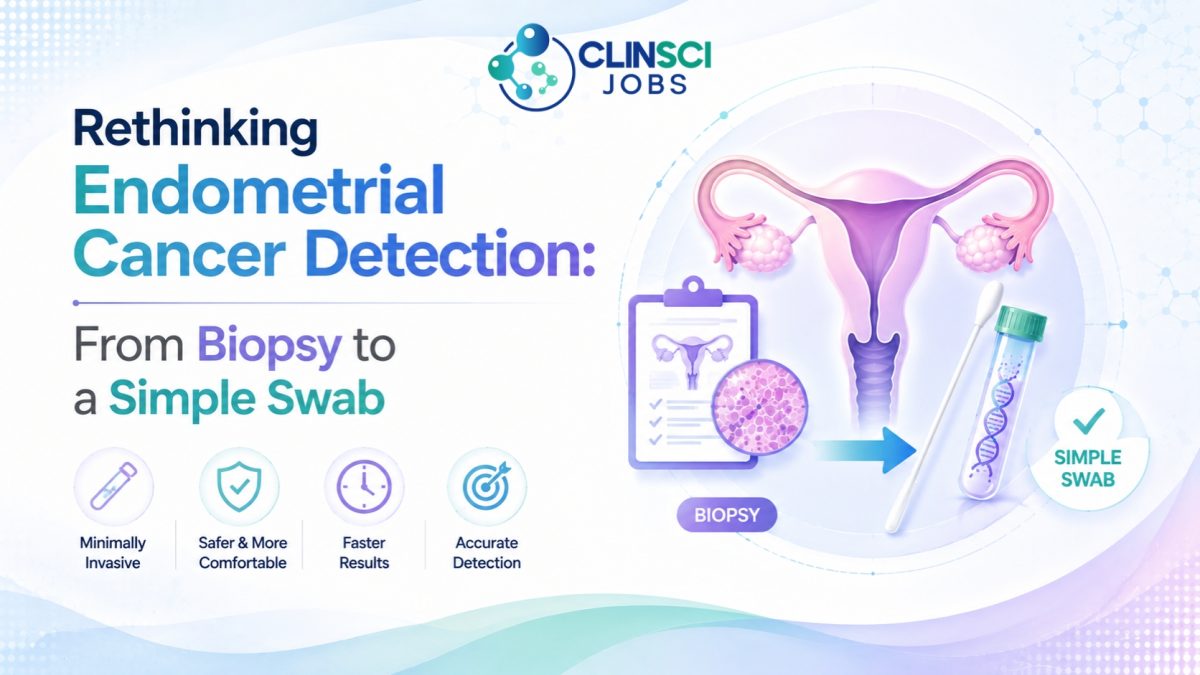
For decades, women experiencing symptoms of possible endometrial cancer have faced the same difficult path: an invasive biopsy, and in many cases, a second surgical procedure if that first sample is inconclusive. In 2026, that may finally be changing. Researchers at Columbia University Irving Medical Center and eleven other medical centers across the country are studying a non-invasive vaginal swab test that could offer a simpler, more comfortable way to evaluate women for endometrial cancer.
The timing could not be more important. Endometrial cancer is projected to be diagnosed in approximately 68,270 women in the United States in 2026, with about 14,450 deaths expected—making it the fourth most common cancer among women nationwide. It is also one of the few cancers where the death rate is climbing rather than falling: mortality rose by an average of 1.6% per year between 2014 and 2023, and incidence continues to increase by 1.8% to 2.6% annually among women of Black, Hispanic, Asian American, and Native American backgrounds. Against this backdrop, a diagnostic approach that could make evaluation faster, easier, and less invasive represents a meaningful step forward for women’s health.
For oncology research professionals, women’s health clinicians, and everyone working in diagnostic clinical trials, this moment illustrates something bigger than a single new test. It shows how molecular diagnostics, patient-centered research design, and multi-site clinical trials are converging to reshape how gynecologic cancers are detected and studied.
Understanding Endometrial Cancer and Why Early Detection Matters
What Endometrial Cancer Is
Endometrial cancer begins in the endometrium, the inner lining of the uterus, and accounts for more than 90% of all uterine corpus cancers. It is the most common cancer of the female reproductive tract in the United States. While the disease occurs most often in postmenopausal women, with an average age at diagnosis around 60, incidence has been rising notably faster among younger women—climbing by roughly 3.0% annually among women in their twenties and 3.3% annually among women in their thirties over the past two decades.
Obesity is understood to be a major driver of this rising incidence, since fat tissue produces circulating estrogen that can promote the growth of endometrial cancer cells. Racial and ethnic disparities in outcomes remain stark: mortality from endometrial cancer is more than double among Black women compared with White women, at 18.4 versus 8.1 deaths per 100,000 between 2019 and 2023, even though overall diagnosis rates are similar between the two groups.
Why Timely, Accessible Diagnosis Is So Important
The most common warning sign of endometrial cancer is abnormal uterine bleeding, particularly bleeding after menopause. Because this symptom prompts most women to seek medical attention relatively early, endometrial cancer is often diagnosed at a localized, more treatable stage compared to many other cancers. However, the current standard evaluation pathway—typically an in-office endometrial biopsy, and in some cases a more invasive dilation and curettage (D&C) procedure performed in an operating room—can be uncomfortable, anxiety-inducing, and in some cases logistically difficult for patients to access quickly.
Delays or barriers in this evaluation process matter because earlier, more accessible detection generally translates into better outcomes, less invasive treatment, and reduced healthcare costs. Removing friction from the diagnostic pathway is not simply a matter of comfort; it is a matter of ensuring that more women, across all backgrounds and communities, are able to complete the evaluation they need without unnecessary delay.
How a Vaginal Swab Test Could Support Earlier, Easier Detection
The Science Behind the Approach
The vaginal swab test under study uses a clinician-collected sample, without the need for a speculum exam, and does not require access to the uterus itself. The underlying science relies on whole-transcriptome sequencing—a method of reading which genes are actively being expressed—combined with machine learning models trained to recognize molecular patterns associated with endometrial cancer.
In an initial exploratory study of 236 women scheduled for hysterectomy, researchers found that molecular signals associated with endometrial cancer could be reliably detected and classified in vaginal swab samples, without any need to access the uterus. A related peer-reviewed analysis, published in the International Journal of Gynecological Cancer, confirmed that machine learning classifiers trained on tissue and swab samples achieved area-under-the-curve accuracy values as high as 0.97 to 0.98, and that vaginal swabs carried sufficient molecular signal to distinguish benign from malignant cases.
What This Could Mean for Patients
Unlike screening tools such as the Pap smear, which are used across the general population, this swab-based approach is being developed specifically for women who are already experiencing symptoms, most commonly abnormal uterine bleeding. The intended clinical use is to help clinicians rule out endometrial cancer with high confidence in symptomatic patients, potentially sparing many women from an immediate invasive biopsy. Researchers describe the test as designed for high specificity, meaning it is expected to be particularly useful for reliably ruling out a cancer diagnosis in appropriate patients.
Beyond clinical accuracy, researchers involved in this line of work have also emphasized the goal of designing a diagnostic pathway “around women, not procedures”. One separate line of research has even explored the possibility that vaginal swab samples could eventually be self-collected at home, a development that—if validated—could further reduce barriers to timely evaluation, particularly for women in rural areas or with limited access to in-person specialty care.
Separately, other approaches to non-invasive endometrial cancer detection are also progressing. Researchers combining vaginal swab DNA analysis with plasma-based circulating tumor DNA (ctDNA) have reported that swab-based genomic profiling achieved 77.7% sensitivity and 96.6% specificity, complementing blood-based testing for prognosis and recurrence monitoring. Other epigenetic-marker approaches using cervico-vaginal samples have reported sensitivities as high as 97% to 100% depending on collection method. Together, these efforts reflect a broader research trend toward non-invasive, molecularly driven diagnostic tools across gynecologic oncology.
Molecular Diagnostics and the Broader Shift in Women’s Health Research
From Histology to Molecular Classification
Endometrial cancer diagnosis and treatment planning have already been transformed once in the past decade by the shift from purely histological classification toward molecular classification. Current professional guidance recommends that all endometrial cancers undergo basic molecular classification, including assessment of mismatch repair status, POLE mutation status, and p53 status, since these markers carry both prognostic value and, increasingly, treatment implications.
This molecular classification framework, often referred to as the Proactive Molecular Classifier for Endometrial Cancer, sorts tumors into four subtypes with distinct clinical behaviors and, in some cases, distinct responses to targeted therapies. Newer sequencing approaches are streamlining this process further: a recent evaluation of a single-test, next-generation sequencing panel targeting 116 cancer-related genes found 93.8% concordance with traditional classification methods, while resolving certain technical failures common in older testing approaches.
How This Connects to Clinical Trial Design
Molecular classification has become foundational to how endometrial cancer clinical trials are designed. Several major cooperative group trials, including multi-arm studies evaluating subtype-directed adjuvant treatment strategies, now require molecular classification data as part of enrollment criteria, using markers like POLE mutation status and mismatch repair status to match patients to the treatment approach most likely to benefit them. Liquid biopsy approaches are also expanding this picture: research using cell-free DNA analysis found informative results in 89% of tested cases, with 65% of cases showing at least one actionable genomic alteration relevant to targeted therapy selection.
Emerging non-invasive detection technologies, including the swab-based approach discussed above, fit naturally into this broader molecular diagnostics ecosystem. As these tools mature, they may eventually support not only initial detection, but ongoing monitoring, risk stratification, and trial eligibility screening—reducing the need for repeated invasive procedures throughout a patient’s diagnostic and treatment journey.
The table below summarizes several non-invasive and molecular approaches currently under active research for endometrial cancer.
| Testing Approach | Sample Type | Reported Performance | Primary Research Application |
|---|---|---|---|
| Vaginal swab RNA/transcriptomic test | Clinician-collected vaginal swab | AUC of 0.97–0.98 in classifier validation | Ruling out cancer in symptomatic women |
| Vaginal swab DNA + plasma ctDNA | Paired swab and blood sample | 77.7% sensitivity, 96.6% specificity (swab) | Diagnosis, prognosis, and recurrence monitoring |
| Cervico-vaginal epigenetic (methylation) test | Cervical smear, vaginal swab, or self-collected sample | 90–100% sensitivity depending on method | Triage of symptomatic and high-risk women |
| NGS molecular classification panel | Tumor tissue | 93.8% concordance with standard classification | Molecular subtyping for treatment selection and trial matching |
| Liquid biopsy (cfDNA) profiling | Blood plasma | 89% informative result rate; 65% actionable findings | Targeted therapy matching in advanced disease |
Diagnostic Validation, FDA Oversight, and Patient Protection
New diagnostic tests like the vaginal swab approach must move through a structured clinical validation process before they can be offered broadly in clinical practice. The current multi-site trial is designed specifically to confirm that the test performs as intended in real-world clinical settings, enrolling close to 3,000 women across sixteen research centers, including major academic medical centers and community health centers. As of mid-2026, enrollment in these validation studies was reported to be roughly 75% complete.
This staged approach to validation reflects a core principle of diagnostic test development in the United States: a promising early study result is not sufficient on its own to change clinical practice. Larger, prospective, multi-site studies are required to confirm accuracy, reproducibility, and safety across diverse patient populations before a test can be adopted more broadly or considered for coverage decisions by insurers and incorporation into professional society guidelines. Developers have indicated they hope the test will eventually be reflected in guidance from the American College of Obstetricians and Gynecologists, a step that typically follows robust, peer-reviewed validation evidence.
Patient protection remains central throughout this process. Participants in diagnostic validation studies provide informed consent, and study designs typically ensure that no patient’s standard clinical care is delayed or altered based on the investigational test result alone until that test has been fully validated. If ongoing trials continue to demonstrate accuracy and reliability, researchers estimate the test could become available in US clinics as early as mid-2027, a timeline that reflects the careful, multi-year validation process required for new diagnostic technologies.
Career Impact: Growing Demand for Women’s Health and Oncology Research Professionals
Why This Research Is Creating New Opportunities
As molecular diagnostics and non-invasive testing methods expand across gynecologic oncology, research institutions and pharmaceutical sponsors are actively growing their women’s health and oncology research teams. Academic cancer centers running multi-site validation trials for new diagnostic technologies require substantial coordination, recruitment, laboratory, and data management support—creating consistent demand for skilled clinical research professionals.
Compensation data from current postings illustrates this demand: clinical research coordinator roles supporting gynecologic oncology programs at major academic cancer centers report salary ranges from roughly $57,500 to $86,500 annually, while specialized oncology clinical trial coordinator roles elsewhere report hourly rates in the $34 to $45 range depending on experience and location.
Key Roles in Endometrial Cancer and Diagnostic Research
Professionals contributing to this evolving field include:
- Clinical Research Associate (CRA): Monitors trial sites participating in diagnostic validation studies, verifies protocol adherence, and ensures data quality across multi-site enrollment.
- Clinical Trial Coordinator: Manages participant scheduling, sample collection logistics, and regulatory documentation for gynecologic oncology and diagnostic trials.
- Clinical Research Nurse: Provides direct patient care and education during trial visits, explains swab collection and testing procedures, and supports patients through the diagnostic evaluation process.
- Oncology Research Coordinator: Coordinates complex clinical research protocols supporting prevention, diagnostic, and therapeutic trials across gynecologic malignancies, working closely with investigators and multidisciplinary teams.
- Medical Lab Professional: Processes vaginal swab, tissue, and blood samples, performs sequencing and molecular analysis, and ensures accurate, quality-controlled results for research and clinical use.
- Molecular Diagnostics Specialist: Applies expertise in next-generation sequencing, transcriptomic analysis, and machine learning-based classification to support test development and validation.
- Clinical Data Manager: Oversees the integrity and structure of diagnostic accuracy data collected across multi-site validation trials, supporting eventual regulatory and guideline submissions.
- Regulatory Affairs Specialist: Guides diagnostic developers through the clinical validation, guideline incorporation, and payer coverage processes required to bring new tests into routine practice.
Skills That Set Candidates Apart
Professionals interested in diagnostic and women’s health oncology research benefit from developing several specific competencies:
- Familiarity with molecular diagnostic techniques, including next-generation sequencing, transcriptomic analysis, and liquid biopsy methods.
- Understanding of gynecologic oncology terminology, molecular classification frameworks, and how these inform clinical trial eligibility.
- Experience with patient recruitment and retention strategies, particularly for studies involving sensitive symptoms or diagnostic uncertainty.
- Strong communication skills for explaining complex testing procedures and results to patients with compassion and clarity.
- Data management and quality assurance skills relevant to multi-site diagnostic validation trials.
Practical Takeaways for Clinical Professionals and Job Seekers
For current oncology and women’s health research professionals:
- Build fluency in molecular diagnostics terminology. As non-invasive testing methods expand across gynecologic oncology, understanding transcriptomic and genomic analysis concepts is increasingly valuable.
- Seek exposure to multi-site diagnostic validation trials. Experience coordinating across multiple research centers is directly relevant as more diagnostic technologies move through large-scale validation studies.
- Stay current on evolving molecular classification guidance. Professional society recommendations for endometrial cancer molecular testing continue to be refined, and staying current supports both research design and patient counseling quality.
For clinical job seekers entering women’s health or oncology research:
- Highlight any coursework, certifications, or hands-on experience with molecular biology, genomic sequencing, or oncology clinical trials on your resume.
- Consider gaining experience in patient-facing research roles, such as clinical trial coordination, where you can build both clinical research skills and direct exposure to diagnostic study workflows.
- Look for opportunities at academic cancer centers actively running gynecologic oncology diagnostic trials, which are consistently expanding their research teams to support this growing area.
Conclusion
The vaginal swab test now being studied across a dozen US medical centers represents more than a single diagnostic innovation—it reflects a broader shift toward non-invasive, molecularly informed approaches to detecting and understanding endometrial cancer. With incidence and mortality both rising, particularly among women of color and younger women, research that makes evaluation faster, more comfortable, and more accessible carries real significance for patient care.
This progress depends entirely on the clinical research professionals who make rigorous, multi-site validation possible—Clinical Research Associates, Clinical Trial Coordinators, Clinical Research Nurses, Oncology Research Coordinators, Medical Lab Professionals, Molecular Diagnostics Specialists, Clinical Data Managers, and Regulatory Affairs Specialists working together across research and clinical care. For those building a career at the intersection of women’s health and diagnostic oncology research, this is a field defined by meaningful, patient-centered work and genuine, measurable impact.
Call to Action
Women’s health and oncology research needs skilled, compassionate professionals to bring diagnostic innovations like this to patients.
Search clinical jobs in oncology research, women’s health clinical trials, and molecular diagnostics across the United States.
Upload your resume to connect with academic medical centers and research institutions advancing endometrial cancer detection and care.
Apply now for Clinical Research Associate, Oncology Research Coordinator, Molecular Diagnostics Specialist, and Clinical Data Manager roles shaping the future of women’s health research.
FAQ
Q1. What is the new swab test being studied for endometrial cancer detection?
Researchers at Columbia University Irving Medical Center and eleven other medical centers are studying a non-invasive vaginal swab test designed to help evaluate women experiencing symptoms of possible endometrial cancer, most commonly abnormal uterine bleeding. The test uses a clinician-collected swab, whole-transcriptome sequencing, and machine learning to detect molecular signals associated with endometrial cancer, without requiring access to the uterus itself.
Q2. Is this swab test meant to replace traditional biopsy for all women?
No. The test is being developed specifically for women who are already experiencing symptoms, and its primary intended use is to help clinicians confidently rule out endometrial cancer, potentially reducing the need for an immediate invasive biopsy in many cases. It is not designed as a general population screening tool, unlike tests such as the Pap smear for cervical cancer.
Q3. How accurate has the swab test been in research studies so far?
Early validation research published in a peer-reviewed gynecologic oncology journal found that machine learning classifiers using swab sample data achieved area-under-the-curve accuracy values as high as 0.97 to 0.98, indicating strong diagnostic performance in that initial study population. Researchers describe the approach as being developed for high specificity, meaning it is expected to be particularly reliable for ruling out cancer in appropriate patients. Larger, ongoing multi-site trials are further confirming these results in real-world clinical settings.
Q4. How is a new diagnostic test like this validated before it becomes available to patients?
New diagnostic tests must move through structured, staged clinical validation before broader clinical use. Following smaller exploratory studies, a test typically advances to larger, prospective, multi-site trials designed to confirm accuracy, reproducibility, and safety across diverse patient populations. Only after this rigorous validation, along with appropriate regulatory and professional guideline review, can a test move toward routine clinical availability, insurance coverage, and formal incorporation into medical society recommendations.
Q5. When might this swab test become available to patients?
If ongoing multi-site clinical validation trials continue to demonstrate accuracy and reliability, researchers involved in this work estimate the test could become available in clinics across the United States as early as mid-2027. As of mid-2026, enrollment in the primary validation study was reported to be roughly three-quarters complete.
Q6. What career opportunities exist in endometrial cancer and diagnostic research?
Growing roles include Clinical Research Associate, Clinical Trial Coordinator, Clinical Research Nurse, Oncology Research Coordinator, Medical Lab Professional, Molecular Diagnostics Specialist, Clinical Data Manager, and Regulatory Affairs Specialist. As non-invasive testing methods and molecular diagnostics expand across gynecologic oncology, academic cancer centers and research institutions are actively growing teams to support multi-site diagnostic validation trials.
Q7. Why is endometrial cancer research receiving increased attention in 2026?
Endometrial cancer is now the fourth most common cancer among women in the United States, with rising incidence and one of the few increasing cancer mortality rates nationally. Incidence is climbing especially quickly among younger women and women of color, while current diagnostic methods remain invasive for many patients. This combination of rising disease burden and diagnostic limitations has intensified research interest in more accessible, non-invasive detection methods.
Follow us on Social Media: LinkedIn | Facebook | Twitter | Instagram